

It usually starts with the credit card.
Mortgage stress is when your repayments take so much of your income that other bills start to slip. The earlier you act the more options you have: review your rate, restructure the loan, consolidate high-interest debts or ask your lender for hardship help. Talking to a broker or your lender early costs nothing and keeps options open.
The groceries go on it one week. The car registration the next. Then the card balance starts to look a lot like the home loan repayment did a few years ago.
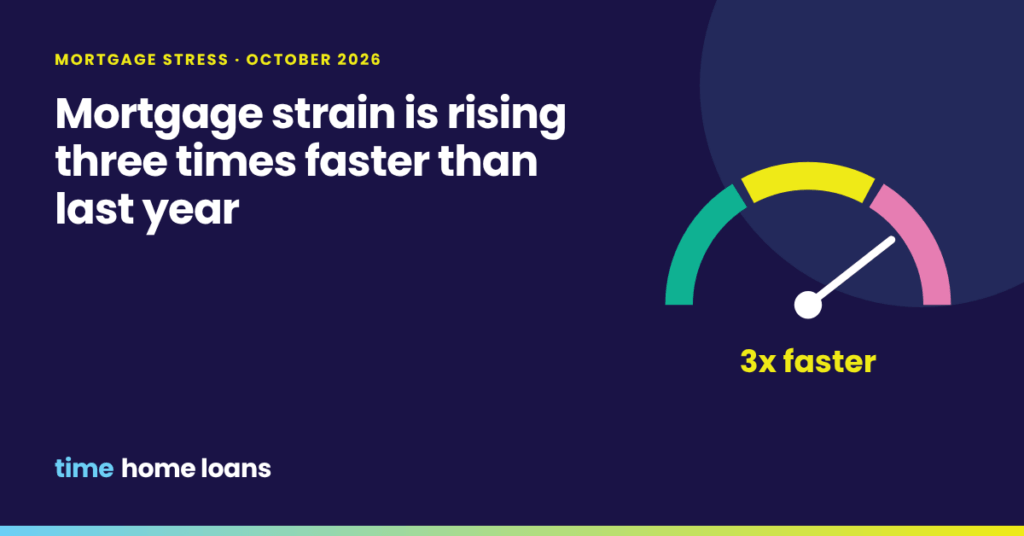
If that sounds familiar, you're not alone. New data from credit bureau Experian shows the number of home loans under strain grew 7.3% in the first half of 2026. In the same period last year it grew 2.3%. That's roughly three times faster.
Who's feeling it most?
Experian counts a loan as 'strained' if it's in arrears, under a hardship arrangement or has had its terms varied. Around 1.8% of home loans were in that position in June. The pressure isn't spread evenly:
- Borrowers aged 35 to 44 saw the fastest growth in strain (up 11.8%)
- Borrowers aged 45 to 54 sat about 13.6% above the national average
- Regional home loans were around 10.5% more likely to be under strain
Those middle-age brackets make sense when you think about it. School fees, bigger loans taken out when rates were low, maybe a second car. Every rate rise lands on top of all of that.
Experian's survey also found 42.4% of people weren't confident they could handle a 10% rise in repayments without cutting back on essentials or borrowing more. One in five said they regularly or sometimes dip into savings or credit to get through a normal month.
What are the early warning signs of mortgage stress?
Arrears don't arrive out of nowhere. Most people see the signs months in advance (they just hope things will turn around). Watch for:
- Using a credit card or buy now, pay later for everyday spending
- Drawing on your redraw or offset just to cover the month
- Your savings going backwards for three months or more
- Paying the minimum on other debts
- Avoiding opening the bank app
That last one is more common than you'd think. Loans are a bit like the ocean: you have to respect them. Turning your back doesn't make the waves smaller.
What can I do if I
The earlier you act, the more options you have. Once repayments are missed, some doors close.
- Review your rate. If you haven't asked your lender for a better rate recently, do it. If they won't move, it may be worth comparing what other lenders offer.
- Look at your loan structure. Sometimes changing how a loan is set up makes a difference. Options can include extending the loan term or a period of interest-only repayments. Both can lower repayments in the short term but usually increase the total interest you pay, so they need careful thought.
- Review your other debts. Consolidating high-rate debts into your home loan can reduce your monthly outgoings. But it can also mean paying off a car or holiday over 25 years. It's a tool to use carefully, not a quick fix.
- Talk to your lender about hardship. If you're already struggling, you can ask your lender for a hardship arrangement. Lenders have teams set up for exactly this. A hardship arrangement is noted on your credit report for 12 months, but it isn't a default and it doesn't change your credit score.
- Get independent help. The National Debt Helpline (1800 007 007) offers confidential financial counselling at no charge.
Hot Tip: Ask for help before you miss a repayment, not after. Lenders have far more room to work with you while your account is still up to date.
Why a broker conversation helps right now
A comparison website can show you a list of rates. It can't tell you whether you'll qualify, whether the switch costs more than it saves or whether restructuring is a better move than refinancing.
That's the part we do. We'll look at your whole situation, tell you what your options are across our panel of 50+ lenders and be upfront if the right move is to stay put or speak to a financial counsellor first.
There's no broker fee to you at any stage.
Book a complimentary loan reviewThis information is general in nature and does not take into account your objectives, financial situation or needs. Consider whether it is appropriate for you and seek professional advice before making any financial decision. Extending your loan term, switching to interest-only or consolidating debt may increase the total interest you pay over the life of the loan. All loans are subject to lender approval, terms and conditions.